Chinese Tone Drills: 15-Minute Daily Practice Routine for Tone Accuracy
A structured, no-guesswork daily routine that systematically builds tone accuracy in just 15 minutes.
The biggest obstacle to tone improvement is not lack of time or talent. It is lack of structure. You know you should practice tones, so you open an app, say a few words, wonder if you are doing it right, get discouraged, and move on to vocabulary review or grammar study -- the parts of Chinese that feel more productive.
This routine eliminates that problem. It tells you exactly what to do for 15 minutes every day. No decisions, no guessing, no wondering if you are practicing effectively. Follow it daily for 30 days and measure your tone accuracy at the start and end. The improvement will be measurable.
The Routine Structure
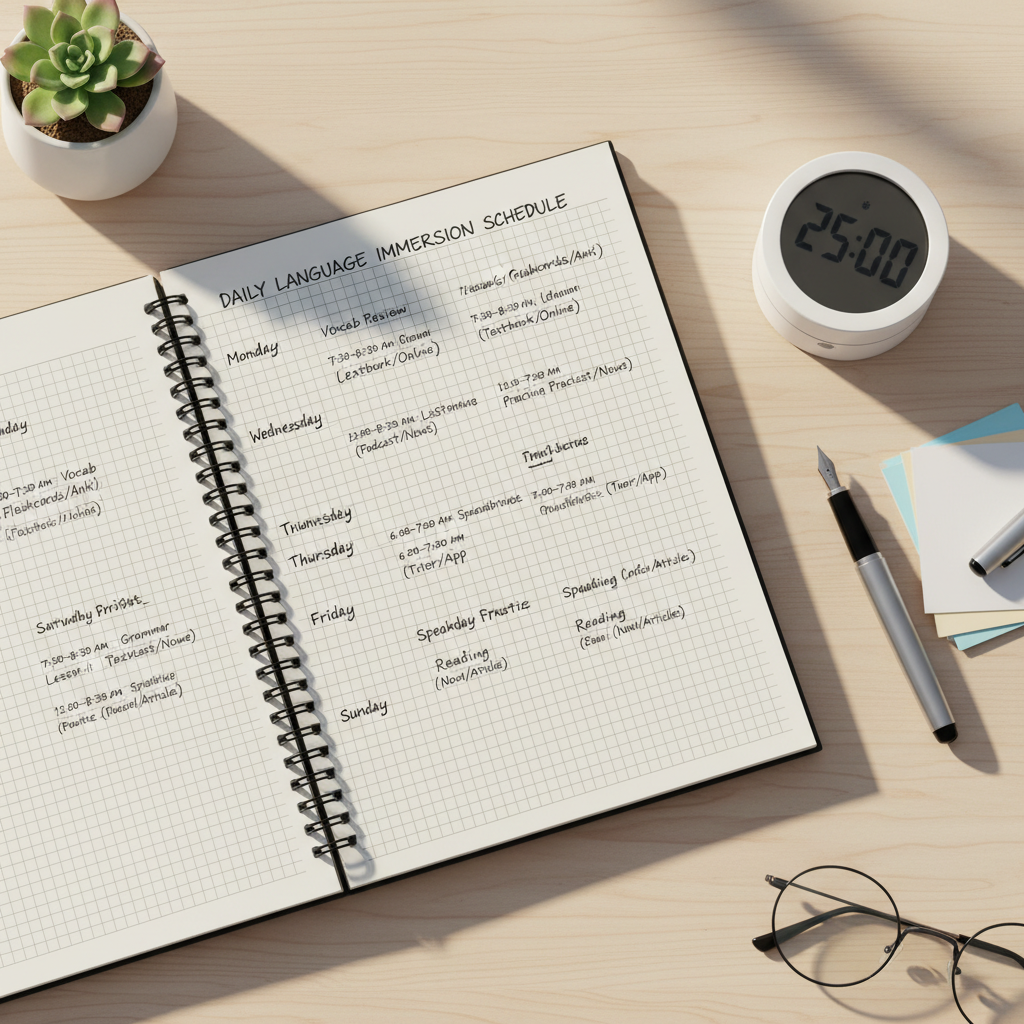
The 15 minutes are divided into three 5-minute blocks, each targeting a different aspect of tone competence: perception, production, and integration. This structure ensures you are training the complete skill, not just one component.
Block 1: Perception Warm-Up (5 Minutes)
Start every session by training your ears. This is not optional and should not be skipped even when it feels easy. Perception is the foundation that production builds on, and it benefits from daily maintenance.
Minutes 1-2: Tone Identification Speed Drill
Listen to single syllables and identify the tone as fast as you can. First tone, second tone, third tone, or fourth tone. Do not overthink. React instinctively. Speed builds automaticity. Aim for 30 to 40 trials in two minutes. Track your accuracy -- you should be above 85 percent for this exercise within two weeks.
Minutes 3-5: Minimal Pair Discrimination
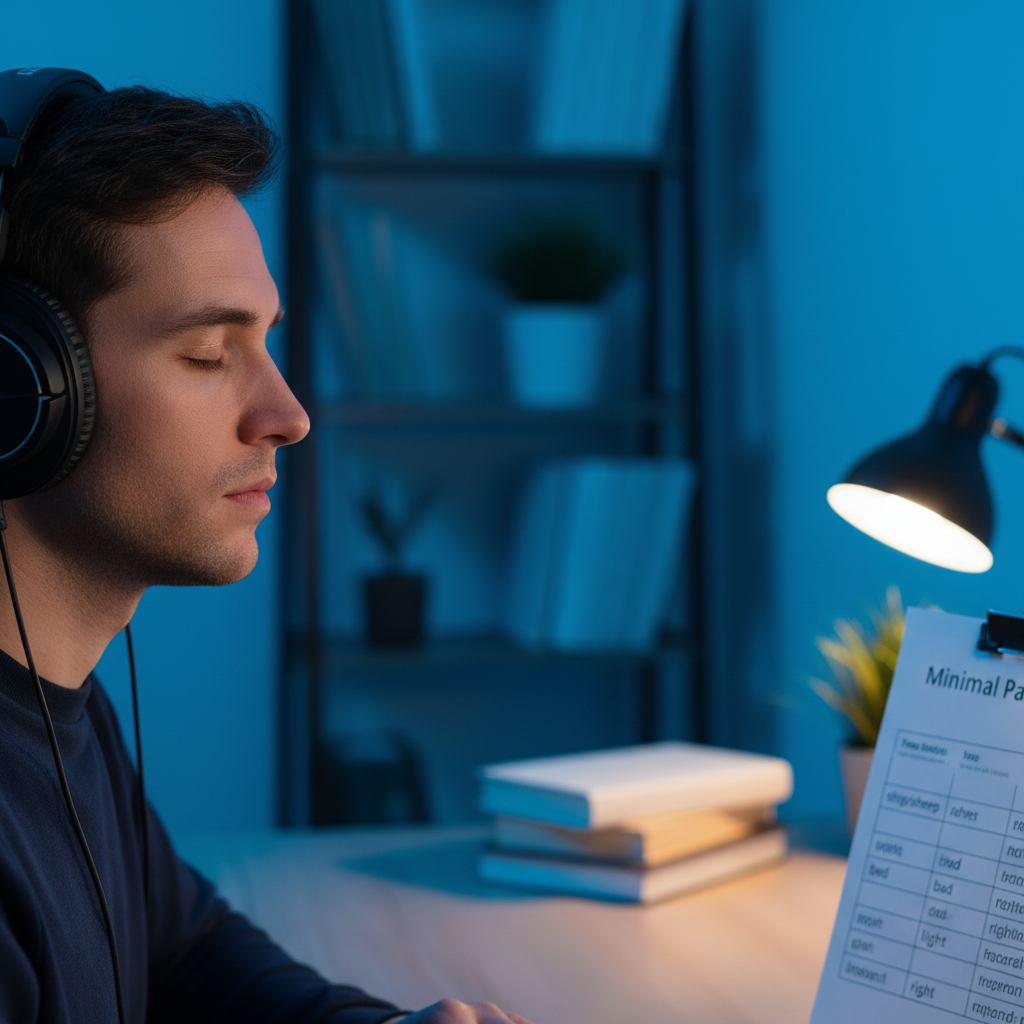
Listen to pairs of words that differ only in tone and identify which is which. Focus on the tone contrasts you find hardest. For most English speakers, this means second tone vs third tone and first tone vs fourth tone in fast speech. Do 20 to 25 trials in three minutes.
Pro tip: If your perception accuracy is below 70 percent on any tone contrast, spend extra time on Block 1 by extending it to 7 minutes and shortening Block 3. Perception must be solid before production practice becomes fully effective.
Block 2: Production Practice (5 Minutes)
Now produce tones yourself, with feedback. This block uses the tone pair method -- practicing two-tone combinations with real vocabulary rather than individual tones in isolation. For a detailed breakdown of which pairs to prioritize, see our guide on common tone pair combinations that trip up beginners.
Minutes 6-8: Focused Tone Pair Drill
Choose one tone pair to focus on for the session. Rotate through all 16 main combinations (4x4) over the course of two to three weeks. For each pair, practice 8 to 10 real vocabulary words. Say each word, get feedback (AI scoring or self-comparison to native audio), and repeat any words where the tones were not accurate.
The rotation schedule matters. Spend two sessions on each pair before moving to the next. When you cycle back to a pair, you should see improvement from the previous attempt. If you do not, that pair needs extra sessions.
Minutes 9-10: Sentence-Level Tone Production
Take three sentences that contain the tone pair you just practiced and say them at a natural speaking pace. This bridges the gap between isolated word practice and real conversation. Record your final attempt at each sentence for comparison.
Block 3: Integration (5 Minutes)
The final block connects tone practice to real communication. This is where isolated tone accuracy becomes conversational tone accuracy.
Minutes 11-13: Shadowing
Shadow a short clip of native Chinese audio (20 to 40 seconds of speech). Focus on matching the speaker's tones while maintaining natural speed and rhythm. Do not pause or restart. Shadow the same clip three times consecutively, trying to improve accuracy with each pass.
Minutes 14-15: Free Production
Describe your day, narrate what you see around you, or answer a simple question -- in Chinese, out loud, for two minutes. This is unscripted speaking where you must produce tones without any model to follow. Record this and listen back, noting any tone errors you catch. Do not correct during production -- just speak. Review afterward.
Weekly Review Protocol
Once per week, replace the normal routine with a 15-minute assessment session. Record yourself reading a set of 20 standard test words (the same 20 every week), score your tone accuracy, and compare against previous weeks. This gives you objective progress data and shows which tones are improving and which are plateauing.
Keep a simple log: week number, overall accuracy percentage, and your two weakest tone pairs. Over four weeks, you should see the accuracy percentage climb and the weak pairs change as you master old ones and expose new ones.
Adapting the Routine to Your Level
Level-specific modifications:
- Complete beginners (month 1): Extend Block 1 to 8 minutes, reduce Block 3 to 2 minutes. Your ears need more training before production practice is maximally useful.
- Early intermediate (months 3-6): Use the standard 5-5-5 split. Add more complex sentences in Block 2.
- Intermediate (months 6+): Reduce Block 1 to 3 minutes (maintenance only), extend Block 3 to 7 minutes. Focus on conversational fluency with correct tones.
Why 15 Minutes Works
Motor learning research consistently shows that short, frequent practice sessions produce better results than long, infrequent ones. This is called the distributed practice effect. Fifteen minutes daily is more effective than a 90-minute weekly session for the same total time investment.
Additionally, 15 minutes is short enough that you can maintain focus throughout. Tone practice requires intense concentration, and attention typically degrades after 15 to 20 minutes. By stopping at 15, you ensure every minute is high-quality practice.
Get Your Daily Tone Drills Delivered Automatically
Our platform builds this exact routine into your daily practice flow -- perception drills, tone pair vocabulary, shadowing exercises, and weekly progress assessments all in one place.
Related Articles
How to Practice Chinese Tones Online Without a Tutor (5 Proven Methods)

Common Tone Pair Combinations That Trip Up Beginners (And How to Master Them)
Minimal Pairs in Mandarin: Training Your Ear to Distinguish Similar Sounds
Written by Conor Martin AI
Creator of the Learn Chinese for Beginners YouTube channel and the Chinese AI learning platform. Helping thousands of people start their Mandarin journey with clear, structured, no-nonsense teaching.
Enjoyed this article?