
The Ultimate Guide to Learning Mandarin Chinese from Scratch in 2025
Everything I wish someone told me before I started learning Chinese -- from tones and pinyin to real conversation fluency.
Mandarin Chinese is spoken by over 1.1 billion people worldwide. It is the most spoken language on the planet by native speakers. And yet, for English speakers, it consistently ranks as one of the hardest languages to learn. The US Foreign Service Institute estimates it takes 2,200 class hours to achieve professional working proficiency.
That number scares people. It scared me too. But here is the thing nobody tells you: you do not need professional working proficiency to have incredible conversations, travel China with confidence, or unlock an entirely new world of culture and opportunity. You need a smart strategy, the right tools, and about 10 weeks of focused practice.
I have spent years teaching Mandarin to beginners on my YouTube channel, Learn Chinese for Beginners, and through my work building AI-powered learning tools. This guide distills everything I have learned into a single, comprehensive resource. If you are looking for a structured path, our beginner's guide to learning Mandarin Chinese online is a great companion to this article. Whether you are starting from absolute zero or picking up Chinese again after a failed attempt, this is for you.
Why Learn Mandarin in 2025?
Before we get into the how, let us talk about the why. Understanding your motivation is the single biggest predictor of whether you will stick with language learning long enough to see results.

Here are the reasons I hear most often from successful learners:
- Career advantage: China is the world's second-largest economy. Mandarin speakers are in high demand across finance, tech, diplomacy, and international business.
- Travel: China has 56 UNESCO World Heritage Sites. Speaking even basic Mandarin transforms your travel experience from tourist to traveler.
- Cultural access: Chinese literature, film, music, and philosophy become accessible. You can read Tang Dynasty poetry, watch C-dramas without subtitles, and understand 5,000 years of history through its original language.
- Cognitive benefits: Studies show bilingual individuals have better memory, improved problem-solving skills, and delayed onset of cognitive decline.
- Personal challenge: There is a deep satisfaction in mastering something genuinely difficult. Mandarin delivers that in spades.
The Four Pillars of Mandarin: What Makes It Different
Mandarin Chinese is fundamentally different from European languages. Understanding these differences upfront saves you months of confusion and misdirected effort.
1. Tones: The Most Important Thing You Will Learn
Mandarin has four tones plus a neutral tone. The same syllable pronounced with different tones means completely different things. The classic example: "ma" can mean mother (first tone, high and flat), hemp (second tone, rising), horse (third tone, dipping), or scold (fourth tone, falling). Get the tone wrong and you might call your mother a horse.

Pro tip: Do NOT skip tone practice because it feels tedious. I see this mistake constantly. Students rush to learn vocabulary and grammar, ignoring tones, then hit a wall at the intermediate level where nobody can understand them. Build the foundation right from day one. On my YouTube channel Learn Chinese for Beginners, I have multiple videos dedicated to tone drills specifically because this is so critical.
Chinese AI includes dedicated tone drills with instant AI feedback from day one -- no guessing whether you got it right.
Here is my recommended approach to tones: First, learn to hear the difference. Listen to native speakers saying the four tones of "ma" over and over until you can reliably identify which tone you are hearing. This takes most people 3 to 5 days of focused practice. Second, learn to produce the tones yourself. Record yourself and compare with native audio. Third, practice tones in context -- not in isolation. Real Chinese does not sound like a textbook. Tones shift and flow in natural speech, and you need to train your ear for that.
2. Pinyin: Your Bridge to Pronunciation
Pinyin is the official romanization system for Mandarin Chinese -- for an in-depth walkthrough, see our complete guide to mastering pinyin. It uses Latin letters to represent Chinese sounds, with accent marks to indicate tones. For example, "ni hao" (hello) is written in pinyin as "ni hao" with tone marks: "nǐ hǎo."
Pinyin is not English. This is the most common trap beginners fall into. The letter "q" in pinyin sounds like "ch" in English. The letter "x" sounds like "sh" but with the tongue positioned differently. The letter "c" sounds like "ts." If you read pinyin as if it were English, your pronunciation will be wrong from day one and increasingly hard to correct.
Spend your first week learning pinyin properly. Learn every initial (the consonant sounds at the beginning of syllables) and every final (the vowel sounds). Practice the combinations. This is not glamorous work, but it is the single highest-return investment you will make in your Mandarin journey.
3. Characters: Beautiful, Logical, and Learnable
Chinese characters look intimidating from the outside. There are roughly 50,000 characters in existence. But before you panic, know this: you only need about 2,500 to read a newspaper. And the first 500 characters cover approximately 80% of everyday text. The characters are not random squiggles. They are built from a set of about 200 radicals, which are recurring components that carry meaning. Once you learn the radicals, new characters become much more intuitive.
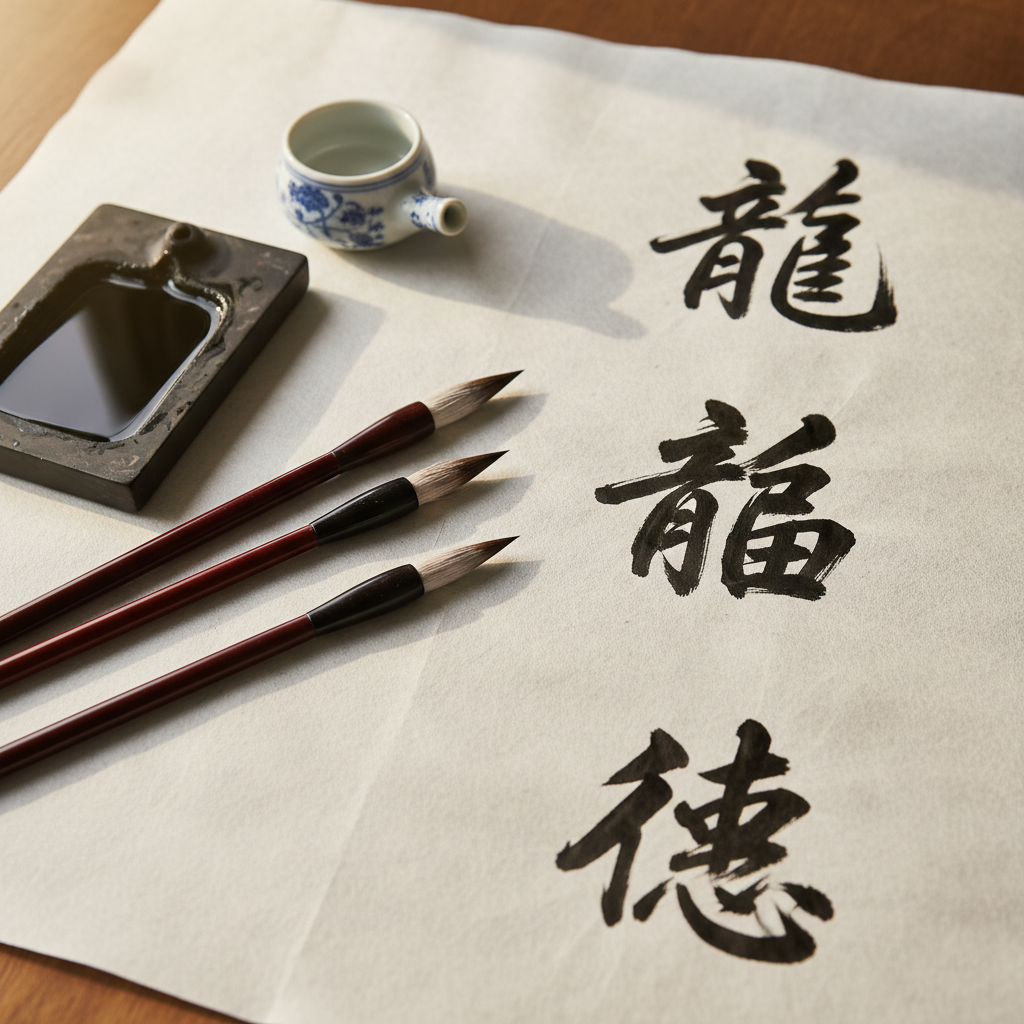
For example, the radical 女 (nǚ) means woman. When you see it as a component in other characters, you know the character is related to women or femininity: 妈 (mā, mother), 姐 (jiě, older sister), 好 (hǎo, good -- which combines woman and child). The radical 木 (mù) means tree. Characters containing it relate to wood or plants: 林 (lín, forest -- two trees), 森 (sēn, dense forest -- three trees), 桌 (zhuō, table -- made of wood).
Pro tip: My recommendation for beginners: Do not try to learn characters and pinyin simultaneously from day one. Start with pinyin and spoken Chinese for the first two weeks. Then gradually introduce characters. This prevents the overwhelming feeling that causes many learners to quit.
4. Grammar: The Surprisingly Easy Part
Here is the good news that nobody talks about enough: Chinese grammar is remarkably straightforward compared to European languages. There are no verb conjugations. There are no noun genders. There are no articles (a, an, the). There is no plural marker for most nouns. There is no subjunctive mood.
The basic sentence structure is Subject-Verb-Object, just like English. "I eat rice" in Chinese is "Wǒ chī fàn" -- literally "I eat rice." The past tense? Add "le" after the verb: "Wǒ chī le fàn" -- "I ate rice." Want to ask a question? Add "ma" at the end: "Nǐ chī fàn ma?" -- "Do you eat rice?" That is it.
The complexity in Chinese grammar comes from measure words (every noun needs a specific counter word), aspect particles (expressing whether an action is completed, ongoing, or experienced), and sentence-final particles that convey mood and attitude. But these are all learnable patterns, not the kind of arbitrary rule memorization that plagues languages like German or French.
The 10-Week Study Plan: From Zero to Conversational
Based on my experience teaching thousands of beginners through my YouTube channel and through the Chinese AI learning platform, here is the study plan I recommend. This assumes 30 to 45 minutes of daily practice.

Weeks 1-2: Foundations
Your goals for the first two weeks:
- Master all pinyin initials, finals, and combinations
- Reliably hear and produce all four tones
- Learn survival phrases: hello, thank you, goodbye, yes, no, excuse me
- Count from 1 to 100
- Introduce yourself: name, nationality, occupation
- Understand basic sentence structure
Do not rush past this phase. I know it is tempting to skip ahead to "real" Chinese, but everything you build for the next 8 weeks rests on this foundation. Think of it like tuning a piano before a concert. Nobody wants to listen to an out-of-tune piano, no matter how complex the piece.
Weeks 3-4: Building Blocks
Now you start expanding:
- Learn your first Chinese characters (start with the 10 most common)
- Understand stroke order and radical systems
- Family vocabulary: talk about parents, siblings, relatives
- Describe people: tall, short, young, old, beautiful, handsome
- Home and room vocabulary
- Daily routine: wake up, eat, work, sleep
- Hobbies and interests
Weeks 5-6: Practical Chinese
This is where Chinese starts becoming genuinely useful:
- Tell time, discuss dates and days of the week
- Navigate places: ask for directions, take transportation
- Food and dining: order at restaurants, describe flavors, pay the bill
- Making plans with friends
- Express preferences: I like, I do not like, my favorite is
By the end of week 6, you should be able to survive a basic trip to China. You can check into a hotel, order food, ask for directions, and have simple conversations about yourself and your life. This is a massive milestone and you should feel proud of reaching it.
Follow This Exact 10-Week Plan on Chinese AI
Our structured curriculum covers every topic in this guide with interactive lessons, AI conversation practice, and progress tracking built in.
Weeks 7-8: Real-World Skills
Now we push into more complex territory:
- Shopping: prices, bargaining, colors, sizes, clothing
- Health vocabulary: body parts, symptoms, pharmacy, hospital
- Emergency phrases: help, call an ambulance, I am lost
- Online shopping and delivery vocabulary
- Healthy living and exercise terminology
Weeks 9-10: Professional and Cultural Fluency
The final push toward conversational ability:
- Work and career vocabulary: jobs, office, meetings
- Education: school, university, studying
- Phone calls and email communication
- Chinese festivals and cultural knowledge
- Weather and seasons
- Expressing emotions and making comparisons
- Telling stories using connecting words: because, so, although, then
At the end of 10 weeks, you will not be fluent. For a detailed breakdown of what comes next, see our Chinese learning roadmap from zero to HSK 3. Let me be honest about that. But you will be conversational. You will be able to hold a real, unscripted conversation with a native speaker about everyday topics. You will understand the structure of the language deeply enough to continue learning independently. And you will have a vocabulary of 500+ words that covers the vast majority of daily situations.
The Five Biggest Mistakes Beginners Make

After teaching thousands of students, I have seen the same mistakes repeated over and over. Here is how to avoid them.
Mistake 1: Ignoring Tones
I have already mentioned this, but it deserves its own section because it is that important. Tones are not optional. They are not "decoration" on top of the real language. They ARE the language. The syllable "shi" has dozens of meanings depending on the tone. Without correct tones, you are essentially speaking a different language.
Mistake 2: Studying in Isolation
Memorizing vocabulary lists without context is one of the least efficient ways to learn. Your brain retains information far better when it is connected to meaning, emotion, and narrative. Instead of memorizing "苹果 = apple" in isolation, learn it in a sentence: "我想吃苹果" (I want to eat an apple). Better yet, learn it in a story or a conversation.
Mistake 3: Perfectionism
Many beginners refuse to speak until they feel "ready." This is a trap. You will never feel ready. The only way to get comfortable speaking is to speak badly, get corrected, and speak again. Every fluent Chinese speaker you admire went through a phase of mangling tones and using wrong measure words. Embrace the awkwardness.
Mistake 4: Using Only One Resource
No single textbook, app, or course can teach you everything. The best learners use a combination: structured lessons for progression, conversation practice for fluency, flashcards for retention, and native content for immersion. This is exactly why I built the Chinese AI platform -- to combine all of these elements in one place.
Mistake 5: Inconsistency
Twenty minutes every day beats three hours on Sunday. Language learning is a consistency game. Your brain needs repeated exposure to form strong neural pathways for the new language. A single intensive session followed by days of nothing is worse than brief daily contact.
Tools and Resources I Recommend
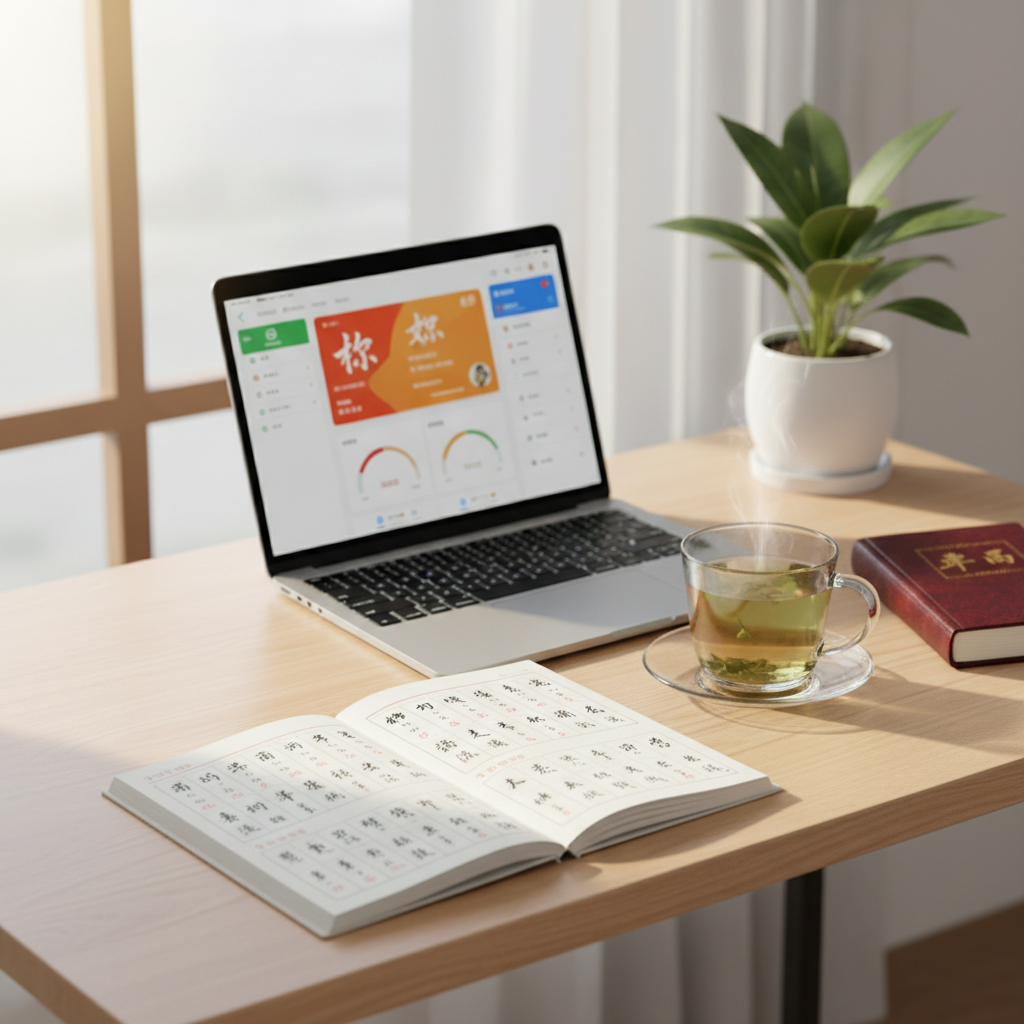
The landscape of Chinese learning tools has improved dramatically in the past few years. Here is what I recommend based on my experience teaching and my own learning journey.
For structured learning:
- Chinese AI (this platform) -- I built this specifically to address the gaps I saw in other tools. It combines structured 10-week lessons with AI conversation practice, spaced repetition, and native-quality audio. Everything a beginner needs in one place.
- My YouTube channel, Learn Chinese for Beginners -- free video lessons covering pronunciation, tones, and essential vocabulary. I publish new content regularly and respond to questions in the comments.
- HSK Standard Course textbooks -- the official textbook series aligned with China's standardized Chinese proficiency test. Excellent for structured grammar progression.
- Pleco dictionary app -- the best Chinese-English dictionary available. Essential for looking up characters and words on the go.
For practice and immersion:
- Language exchange partners -- find native Chinese speakers learning English. Tandem and HelloTalk are good platforms for this.
- Chinese podcasts -- ChinesePod and Mandarin Corner offer graded content from beginner to advanced.
- Chinese TV shows and movies -- start with subtitles in both Chinese and English. Gradually drop the English subtitles as your reading improves.
- Chinese music -- listening to Mandopop helps train your ear for tones and natural rhythm.
Learn Chinese for Beginners
Subscribe to Learn Chinese for Beginners on YouTube for free weekly lessons, tone drills, and conversation practice videos.
Subscribe on YouTubeThe Psychological Game: How to Stay Motivated
Learning Mandarin is a marathon, not a sprint. There will be days when you feel like you are making incredible progress, and days when you feel like you have learned nothing. Both feelings are normal. Here is how to maintain momentum.
Strategies that actually work:
- Set micro-goals: instead of "learn Chinese," aim for "learn 5 new words today" or "have a 2-minute conversation in Chinese this week."
- Track your progress visually: use streaks, charts, or a simple calendar where you mark each day you studied. The Chinese AI platform does this automatically with daily goals and achievement badges.
- Find your why and write it down: tape it to your mirror, make it your phone wallpaper, whatever keeps it visible.
- Celebrate milestones: your first conversation with a native speaker, your first time reading a Chinese sign, your first time understanding a sentence in a movie. These moments matter.
- Connect with other learners: language learning is more fun and sustainable when you have a community. Join Chinese learning forums, Discord servers, or local conversation groups.
"The best time to start learning Chinese was ten years ago. The second best time is right now."
Frequently Asked Questions
How long does it really take to learn Mandarin?
It depends entirely on your definition of "learn." Basic conversational ability: 3 to 6 months of daily practice. Comfortable intermediate level: 1 to 2 years. Near-fluent proficiency: 3 to 5 years. Professional/native-like fluency: 5+ years. But remember, you start getting real value from Mandarin very early in the process. After just a few weeks, you can have simple conversations and navigate basic situations.
Should I learn Simplified or Traditional characters?
Simplified characters are used in mainland China, Singapore, and Malaysia. Traditional characters are used in Taiwan, Hong Kong, and Macau. For most learners, I recommend starting with Simplified. It is what the majority of Chinese speakers use, and the characters are (as the name suggests) simpler to write and memorize. You can always learn Traditional later -- the transition is easier than you might think because many characters are identical or very similar.
Is Mandarin really the hardest language for English speakers?
It is one of the hardest according to the FSI, along with Arabic, Japanese, and Korean. But "hard" does not mean "impossible." It means it requires more time and the right approach. The tonal system and characters are unfamiliar, which adds a learning curve. But the grammar is much simpler than many European languages. And the rewards of learning Chinese are proportional to the challenge.
Can I learn Chinese without a teacher?
Yes, especially with modern tools. AI-powered platforms can now provide conversation practice, pronunciation feedback, and structured curriculum that was previously only available through private tutors. That said, having a human teacher or conversation partner accelerates your learning, especially for pronunciation correction and cultural nuance. My recommendation: use self-study tools as your primary method, and supplement with periodic human interaction.
Your Next Step
You have read this far, which means you are serious about learning Mandarin. Good. That seriousness is the most important ingredient. The strategy is laid out above. The tools are available. The only thing left is action.
Start today. Not tomorrow, not next Monday, not after you finish your current Netflix series. Today. Even if it is just 10 minutes learning to say "nǐ hǎo" with the correct tones. That first step turns "I want to learn Chinese" from a dream into a project. And projects get finished.
Your Mandarin Journey Starts Here
Everything in this guide -- tones, pinyin, characters, conversation -- is built into our 10-week AI curriculum. Structured lessons, real-time feedback, and a study plan that adapts to your pace.
I will see you in the lessons. 加油 (jiā yóu) -- keep going!
Related Articles


Written by Conor Martin AI
Creator of the Learn Chinese for Beginners YouTube channel and the Chinese AI learning platform. Helping thousands of people start their Mandarin journey with clear, structured, no-nonsense teaching.
Enjoyed this article?