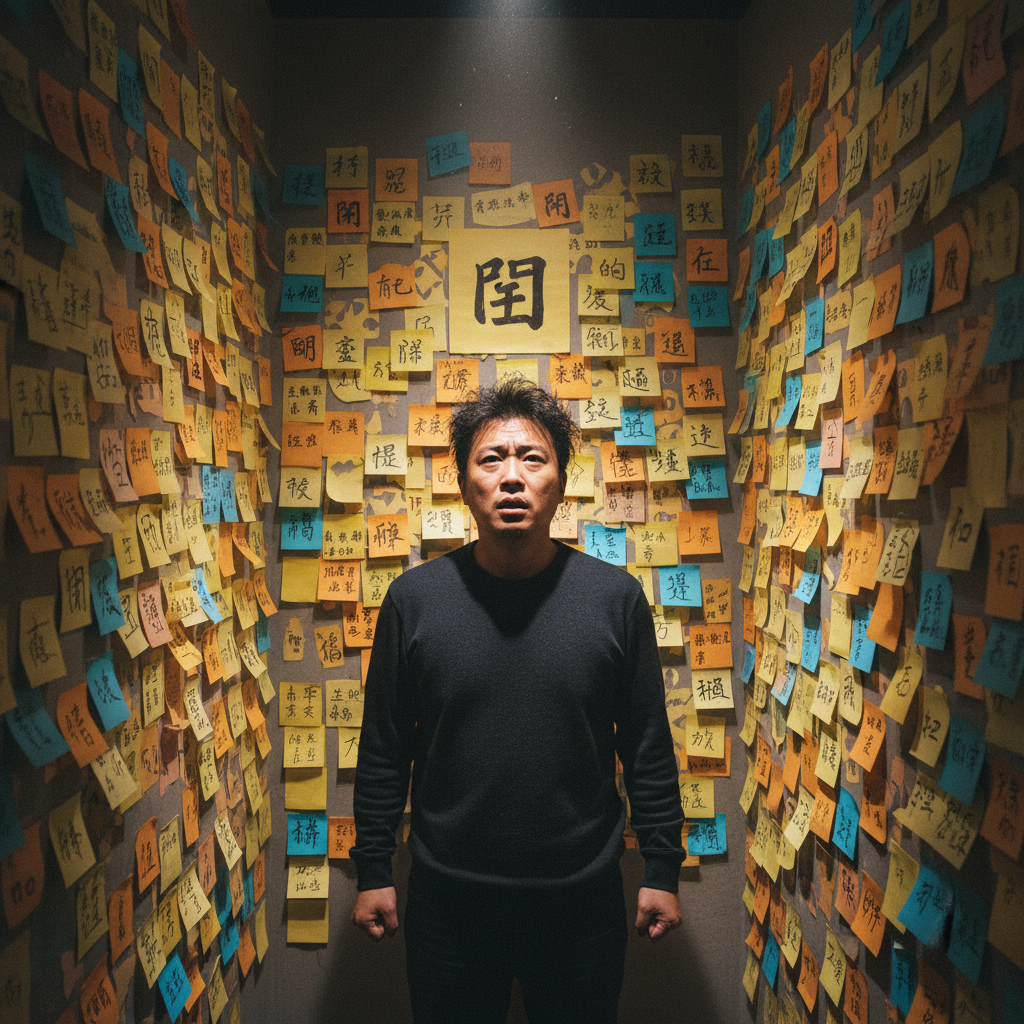
How to Learn Chinese Online If You Hate Memorizing Characters
Characters are the wall that stops most Chinese learners. But the wall is not as high as it looks, and there are ways around, over, and through it that do not require brute-force memorization.
Let me validate something that the Chinese learning community often refuses to acknowledge: hating character memorization is rational. Chinese characters are objectively the most time-intensive writing system for adult learners to acquire. There are thousands of them. They share visual components in ways that create confusing near-duplicates. The connection between how a character looks and what it means is often opaque. And the standard advice -- "just do your Anki reps every day" -- transforms language learning from an engaging intellectual challenge into a joyless flashcard grind that kills motivation for everything else.
If you hate memorizing characters, you have two paths forward. Path one: learn characters using methods that do not feel like memorization. Path two: deprioritize characters and focus on spoken Chinese first, adding characters later when you have enough spoken ability to make them meaningful rather than abstract. Both paths are legitimate, and I will walk you through each one in detail.
Why Traditional Character Memorization Feels Terrible
Before fixing the problem, it helps to understand why character memorization feels so much worse than learning vocabulary in other languages. There are specific cognitive reasons, and they point toward specific solutions.
Why character grinding feels uniquely painful:
- No phonetic anchor: When you learn a French word, the spelling gives you a reasonable guess at pronunciation. When you see a Chinese character, the visual form tells you almost nothing about how it sounds. You are learning two separate things -- shape and sound -- with no bridge between them. This doubles the cognitive load per word.
- High visual similarity: Characters like "shi" (ten), "qian" (thousand), and "gan" (dry) differ by a single stroke. Your visual memory has to discriminate at a level of detail it is not accustomed to. Early on, many characters blur together into indistinguishable shapes.
- No transferable patterns (at first): In the first months, you lack the radical knowledge to see characters as combinations of meaningful parts. Every character looks like a unique, arbitrary symbol. Memorizing 500 arbitrary symbols is objectively harder than memorizing 500 words that share roots and patterns.
- Delayed payoff: You can learn to say "ni hao" and use it in conversation immediately. Learning to write the characters for "ni hao" provides no immediate conversational benefit. The reward for character effort is delayed, abstract, and invisible to others.
Every one of these problems has a solution. But the solution is not "try harder at flashcards." The solution is changing the method entirely.
Path One: Learn Characters Without Memorizing Them
The word "memorize" implies brute-force repetition: see character, recall meaning, repeat until it sticks. This is the worst possible method for characters and the one most commonly recommended. Here are approaches that actually work with your brain instead of against it.
The Radical-First Revolution
This single change transforms the character learning experience more than any other. Before you learn a single character, learn the 50 most common radicals. Radicals are the building blocks that characters are assembled from. Once you know them, characters stop being arbitrary shapes and become combinations of meaningful components.
For example, the radical for "water" appears in characters for river, lake, ocean, swim, wash, juice, and dozens of other water-related words. The radical for "mouth" appears in characters for eat, drink, call, ask, and other mouth-related actions. When you see a new character containing the water radical, you already know it is probably water-related. That contextual clue turns memorization into pattern recognition, which your brain does naturally and effortlessly.
Learning 50 radicals takes one to two weeks. The investment pays off across the next 3,000 characters you will ever learn. This is not a marginal improvement. It is the difference between trying to memorize phone numbers digit by digit versus recognizing area codes and patterns. The information is the same. The cognitive load is dramatically different.
Story-Based Character Learning
Once you know radicals, you can construct stories that link a character's components to its meaning. This method, sometimes called the Heisig method after the author who popularized it, works because human memory is designed for narratives, not for isolated facts.
Take the character "xiu" meaning "rest." It combines the radical for "person" on the left with the component for "tree" on the right. The story writes itself: a person leaning against a tree is resting. You do not memorize this through repetition. You understand it through a story that makes logical sense, and your brain retains stories far more reliably than arbitrary associations.
Not every character has such a clean story. Some require creative, even absurd narratives. But absurd stories are actually more memorable than logical ones -- your brain flags unusual information for retention. The weirder the story, the better it sticks.
Pro tip: Story-based character learning does not feel like memorization because it is not memorization. It is comprehension. You are understanding why a character looks the way it does, not drilling its shape into your visual memory through repetition. Most learners who "hate memorizing characters" discover they enjoy learning characters through stories. The frustration was with the method, not the characters.
Reading-Based Character Acquisition
Children learn to read by reading, not by memorizing letters in isolation. The same principle applies to Chinese characters, with one important modification: you need graded text that controls which characters appear.
Graded Chinese readers introduce characters gradually through stories. At the lowest level, a story might use only 150 unique characters. You encounter each character multiple times in different contexts across the story. This repeated contextual exposure builds character recognition naturally, the way your brain is designed to acquire written language -- through meaningful use, not through flashcard drills.
The advantage of reading-based acquisition is that it never feels like studying characters. It feels like reading a story, which happens to be in Chinese, which happens to teach you characters. The characters are a byproduct of an engaging activity rather than the explicit target of a painful one. For learners who hate the feeling of "studying," this reframe is transformative.
Input-Heavy Character Exposure
Watch Chinese content with Chinese subtitles. Listen to Chinese audio while reading the transcript in characters. Scroll through Chinese social media. Play Chinese-language games. Every time your eyes encounter a character in a meaningful context, your brain registers it, even if you are not consciously studying.
This passive exposure does not replace active study for building recognition of new characters. But it dramatically reinforces characters you have encountered before, and it builds the kind of fast, automatic recognition that flashcards alone cannot develop. Your brain needs to see a character in context hundreds of times to process it as fast as you process English words. Flashcards provide deliberate encounters. Immersive input provides volume.

Path Two: Speak First, Characters Later
Here is a truth that character-centric teachers rarely admit: you can learn to speak, understand, and communicate in Chinese without knowing a single character. Mandarin existed as a spoken language for thousands of years before any standardized writing system. Pinyin, the romanized spelling system, can represent every sound in Mandarin using the Latin alphabet you already know. A spoken-first approach is historically how most people have learned Chinese and it remains entirely viable.
The spoken-first approach means spending your first three to six months focused exclusively on pronunciation, tones, listening comprehension, vocabulary (using pinyin), grammar, and conversation. Characters are deliberately postponed. This lets you build a functional spoken foundation before adding the character layer.
Why Spoken-First Can Actually Accelerate Character Learning
This seems counterintuitive, but postponing characters can make them easier when you do start. Here is why: when you learn a character for a word you already know and use in conversation, the character is not an arbitrary symbol. It is the written form of a word that already has meaning, sound, and emotional associations in your brain. You are adding one new piece of information (the visual form) to an existing knowledge structure, rather than trying to learn sound, meaning, and visual form simultaneously.
Compare this to the standard approach where you learn the character, pinyin, and meaning all at once. You are building three associations simultaneously between three new pieces of information. The cognitive load is much higher, and the failure rate per flashcard is much higher, which is exactly why character memorization feels so painful for beginners.
The Spoken-First Timeline
A practical spoken-first approach:
- Months 1-2: Master pinyin and all four tones. Build a foundation of 200-300 spoken vocabulary words. Begin simple conversations. All study uses pinyin, no characters.
- Months 3-4: Expand vocabulary to 500-600 words. Practice daily conversation with AI or language partners. Learn basic grammar structures through spoken practice. Still no characters.
- Month 5: Begin character introduction with the radical-first method. You now know 500+ words, so every character you learn is the written form of a word you already speak and understand.
- Months 6-12: Learn characters gradually alongside continued spoken development. Character learning is dramatically faster because you are only learning one new thing (the visual form) per word instead of three.
The risk of the spoken-first approach is that you may become comfortable without characters and resist adding them. Characters are ultimately necessary for literacy, reading signs and menus in China, texting with Chinese friends, and accessing written content. The spoken-first approach postpones characters. It does not eliminate them. Plan from the start when you will begin the character phase, and commit to that timeline.
What to Do Right Now If Characters Are Killing Your Motivation
If you are currently in a study routine that includes character memorization that you dread, and that dread is threatening your overall Chinese learning motivation, here is what I recommend.
Immediate action plan:
- Stop your current character study method today. Not permanently. Just pause it.
- For the next two weeks, spend all your study time on spoken Chinese: pronunciation, listening, conversation practice. Remember why you started learning Chinese. It was probably not because you wanted to memorize symbols.
- During those two weeks, learn the 50 most common radicals using story-based methods. This is character-adjacent study that feels different from flashcard grinding.
- After two weeks, try reading-based character learning using graded readers at the lowest level. See if characters feel different when they appear in stories rather than on flashcards.
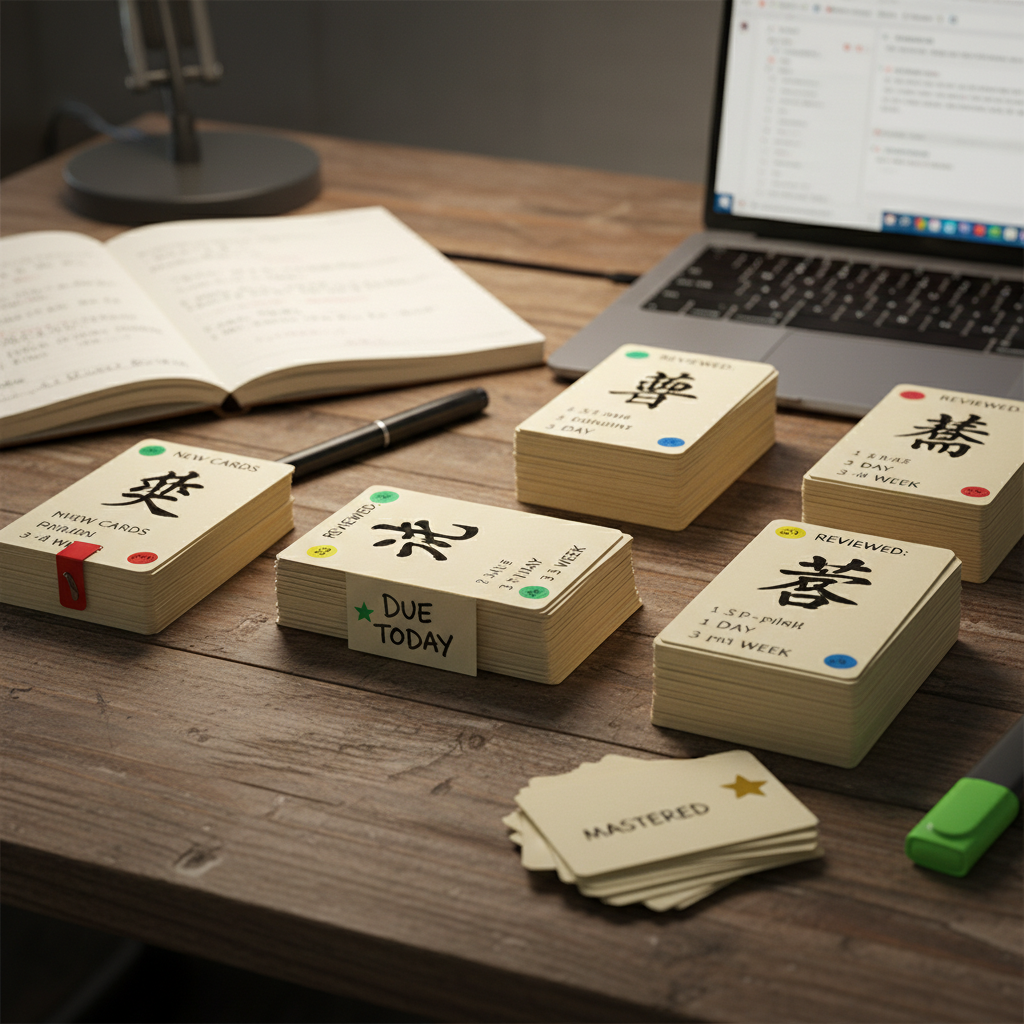
- If reading-based learning works for you, make it your primary character method and supplement with minimal SRS review.
- If you still hate characters after trying these approaches, commit to a spoken-first path for the next three months and plan to reintroduce characters when your spoken Chinese is strong enough to make them meaningful.
The Real Enemy Is Not Characters
The real enemy is quitting. If character memorization is grinding your motivation to zero and you are about to abandon Chinese entirely, then anything that keeps you studying -- including temporarily ignoring characters -- is the right choice. A learner who speaks conversational Chinese with no character knowledge is infinitely more advanced than a learner who quit after three months of joyless flashcard reviews.
Characters are important. They are not more important than your continued motivation to learn. Find a method that works for your brain, adjust the timeline to match your tolerance, and protect your motivation above all else. The characters will come. They come faster and easier when you actually enjoy the process of learning them.
"The best character learning method is the one you will actually do tomorrow, and next week, and next month. An imperfect method used consistently will outperform a perfect method abandoned after two weeks. Match the method to your brain, not your brain to the method."
Learn Chinese Your Way
Our platform lets you choose your path. Focus on speaking and listening first with AI conversation practice and structured audio lessons, then layer in characters when you are ready. No flashcard grinding required.
Related Articles


Written by Conor Martin AI
Creator of the Learn Chinese for Beginners YouTube channel and the Chinese AI learning platform. Helping thousands of people start their Mandarin journey with clear, structured, no-nonsense teaching.
Enjoyed this article?