
How AI Is Revolutionizing Chinese Language Learning in 2025
From tone correction to real-time conversation practice -- artificial intelligence is solving the hardest problems in Mandarin education.
I spent years learning Mandarin the traditional way. Textbooks with stilted dialogues between characters named Wang Ming and Li Hua. Audio CDs where every sentence was spoken at half the speed of actual human conversation. Flashcard decks with thousands of characters that I would memorize, forget, re-memorize, and forget again. Grammar drills that felt like filling out tax forms in a language I did not understand.
It worked, eventually. But it was slow, painful, and deeply inefficient. I estimate that at least 40 percent of my study time was wasted on activities that either targeted the wrong skills, repeated material I already knew, or failed to address the specific areas where I was struggling.
Then AI changed everything. Not in the vague, buzzwordy way that tech companies like to claim. In concrete, measurable ways that I can point to and say: this specific problem that used to take months to solve now takes weeks. This skill that required an expensive private tutor can now be practiced at 2 AM in your pajamas. This feedback loop that used to require a native speaker sitting across from you now happens in real time on your phone.
This article is about those specific changes. No hype, no hand-waving. Just a honest look at how AI is solving the hardest problems in Mandarin education, where it still falls short, and how you can use it to learn Chinese faster than any previous generation of students. For a broader look at course options, see our guide to the best online Mandarin course for serious learners.
The Old Way Was Broken (And We Knew It)
Before we talk about AI, we need to be honest about what it is replacing. Traditional Chinese language education has a dropout rate that should embarrass the entire industry. Studies estimate that over 90 percent of adult learners who start Mandarin quit within the first year. Nine out of ten. That is not a student problem. That is a system problem.

The reasons are well-documented. Chinese has four tones, and most learning materials give you a diagram, a few audio examples, and then move on -- as if hearing a tone demonstrated three times is enough to rewire your brain to perceive a sound category that does not exist in English. Chinese characters require massive repetitive exposure, but textbooks present them in a fixed order that ignores how your individual memory works. Conversation skills require real-time practice, but classes give you scripted role-plays that bear no resemblance to how actual Chinese people talk.
The fundamental problem is that traditional methods are one-size-fits-all in a domain where personalization is everything. Your struggles with second tone versus third tone are different from the next student. The characters you keep forgetting are different. The topics you need to discuss are different. Yet everyone gets the same textbook, the same audio, the same pace.
AI does not have this limitation. And that changes the game entirely.
AI Hears Your Tones Better Than You Do
Tones are the single biggest barrier for English speakers learning Chinese. They are also the area where AI has made the most dramatic improvement over traditional methods.
Here is the problem with learning tones from a human teacher: even the best teacher can only tell you "that sounded like second tone, try it again as fourth tone." They cannot show you a real-time visualization of your pitch contour overlaid against the target. They cannot process 500 attempts in an hour and identify that your third tone is consistently too short. They cannot detect that you nail isolated tones perfectly but fall apart when combining third tone with second tone in natural speech.
Pro tip: Modern speech recognition AI does not just hear whether you said the right word. It analyzes the pitch trajectory of every syllable, compares it against native speaker models, and pinpoints exactly where your pronunciation deviates. This is the kind of granular, instant feedback that used to be impossible outside a university phonetics lab.
The AI systems I have tested -- and the one we built into the Chinese AI platform -- can detect tone errors with over 90 percent accuracy. More importantly, they can categorize your errors. Are you consistently dipping too early on third tone? Is your first tone drifting downward? Are your second and third tones merging into the same rising pattern? These patterns are invisible to the student and difficult even for experienced teachers to articulate clearly. AI surfaces them immediately.

The result is that tone acquisition, which traditionally took months of classes, can now be compressed into weeks of focused AI-guided practice. I have seen learners on our platform achieve reliable four-tone discrimination in 10 to 14 days of daily practice. That same milestone used to take my in-person students 6 to 8 weeks.
Want to see how AI tone coaching actually works? Get instant feedback on your pronunciation with Chinese AI.
Conversation Without the Anxiety
Ask any language teacher what the biggest barrier to speaking fluency is, and they will not say grammar or vocabulary. They will say anxiety. Students who know enough Chinese to hold a conversation freeze up the moment they face a real person. The fear of making mistakes, of sounding stupid, of not understanding the response -- it paralyzes them.
AI conversation partners eliminate this barrier completely. You can stumble, restart, take 30 seconds to form a sentence, make embarrassing mistakes, and the AI will not judge you, lose patience, or switch to English out of convenience. It waits. It responds at a level you can understand. It gently corrects when appropriate and lets minor errors slide when the communication was successful.

This is not a small thing. In my experience, the difference between students who achieve conversational fluency and those who plateau at "I can read and understand but cannot speak" is almost entirely a matter of speaking practice hours. The students who speak become speakers. The students who only study become permanent students. AI makes speaking practice available to everyone, at any hour, at zero social cost.
The quality of AI conversation has improved dramatically even in the past 12 months. Current models understand context, remember what you discussed earlier in the conversation, adjust their vocabulary to your level, and can roleplay specific scenarios -- ordering at a restaurant, negotiating a price at a market, making small talk with a colleague. They are not perfect substitutes for human interaction, but they are extraordinary preparation for it.
Spaced Repetition, Supercharged
Spaced repetition is not new. The concept -- reviewing material at gradually increasing intervals to optimize long-term memory -- has been around since the 1880s when Hermann Ebbinghaus first mapped the forgetting curve. Digital flashcard apps like Anki have used it for decades.
What AI adds is intelligence about what to review and how. Traditional spaced repetition treats every piece of information as an independent unit. You either remember the character or you do not. AI-powered systems understand relationships between characters, words, and concepts. They know that if you just learned the character for "water" and are about to learn "river," those two reviews should be scheduled close together to reinforce the shared radical. They know that confusable pairs like shi and xi need more frequent side-by-side drilling than characters that look and sound nothing alike.
"The best spaced repetition system is the one that knows not just when you will forget something, but why you will forget it and what to pair it with so you never do."
AI also adapts to your learning style and schedule in ways static algorithms cannot. If you study in short bursts on your phone during your commute, the AI prioritizes quick-recall items. If you have a 45-minute session on the weekend, it introduces new material with deeper context. If you miss three days, it does not blindly dump all your overdue reviews on you -- it intelligently triages, focusing on the items most at risk of being permanently forgotten.
Characters: From Rote Memorization to Pattern Recognition
Chinese characters are beautiful, logical systems -- but learning them has traditionally been an exercise in brute force. Write the character 50 times. Hope it sticks. When it does not, write it 50 more times. This approach ignores everything we know about how the brain actually forms and retains visual memories.
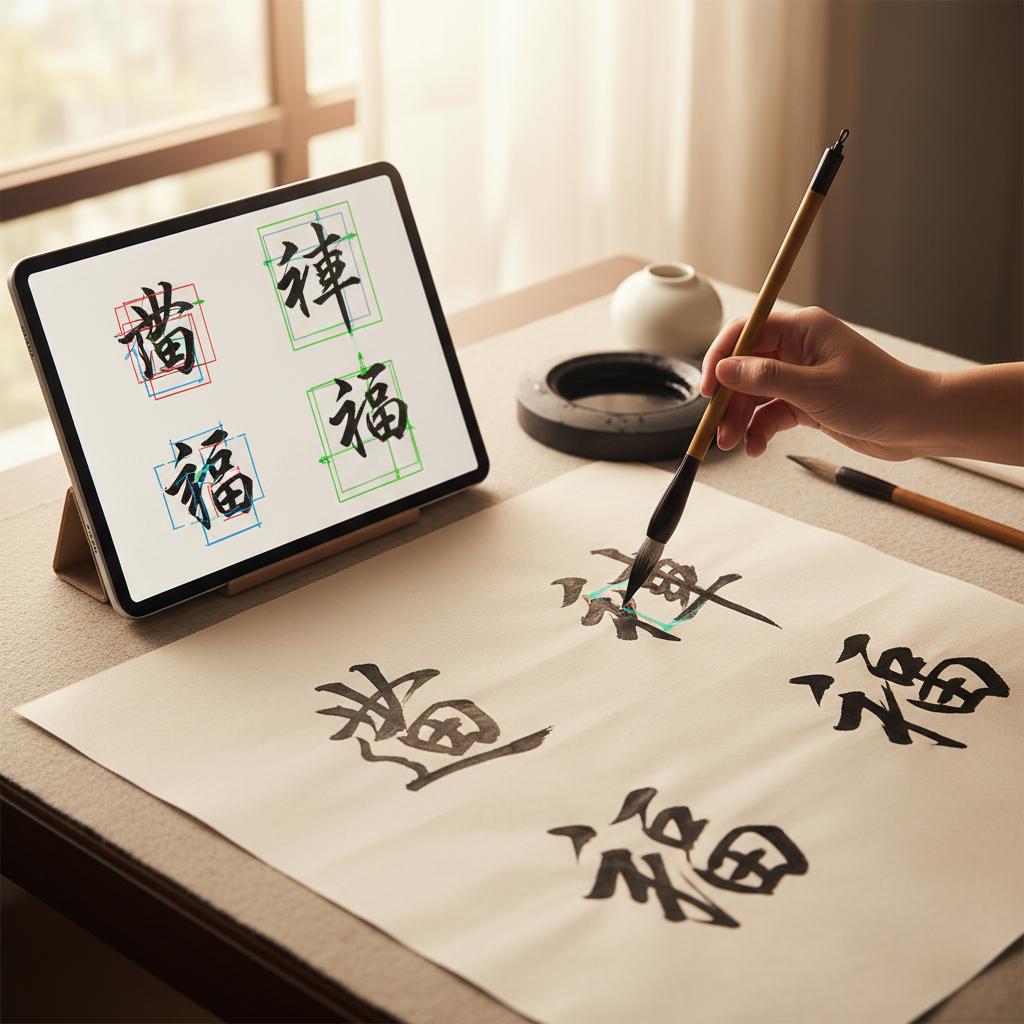
AI-powered character learning works differently. It presents characters in clusters organized by shared radicals, phonetic components, or semantic relationships. When you learn a new character, the AI highlights which parts you already know, explains why they are combined the way they are, and connects the new character to your existing knowledge network. Instead of memorizing 3,000 isolated symbols, you are building a web of interconnected components where each new character makes the ones you already know more memorable.
Some platforms, including ours, also use AI-generated mnemonics personalized to your background. If you are a cook, the AI might remember that and create food-related stories for new characters. If you are a musician, it might use musical metaphors. These personalized hooks are dramatically more memorable than generic textbook explanations because they connect new information to things you already care about.
The Curriculum That Adapts to You
Traditional Chinese courses follow a fixed syllabus. Lesson 1 covers greetings. Lesson 2 covers numbers. Lesson 3 covers family vocabulary. Everyone moves at the same pace through the same material in the same order. If you already know numbers from exposure to Chinese media, too bad -- you are sitting through Lesson 2 anyway. If greetings click immediately but family vocabulary takes you three times as long, too bad -- the course allocates equal time to both.
AI-powered platforms track your performance on every interaction and continuously adjust. They notice that you master listening comprehension faster than production, so they shift practice toward more speaking exercises. They detect that you consistently confuse certain grammar patterns and introduce targeted drills. They identify vocabulary gaps in topics you care about -- maybe you need restaurant Chinese because you are traveling to Beijing next month -- and prioritize accordingly.
Here is what a truly adaptive AI learning system can do that a fixed curriculum cannot:
- Skip material you already know, tested through diagnostic assessments rather than self-reporting
- Spend more time on your specific weak points without holding you back on strengths
- Introduce new topics when you are ready rather than when the syllabus says so
- Adjust difficulty in real time -- if you are breezing through, it increases complexity; if you are struggling, it breaks the concept into smaller pieces
- Integrate your real-world needs into the curriculum rather than following a generic sequence
- Track long-term patterns that even you might not notice, like the fact that your accuracy drops every Friday evening, probably because you are tired
This level of personalization was previously only available through one-on-one tutoring at rates of 50 to 100 dollars per hour. AI makes it available to anyone with an internet connection.
Experience a Curriculum That Adapts to You
Chinese AI builds a personalized learning path based on your level, goals, and pace. No two students follow the same sequence.
What AI Still Cannot Do (An Honest Assessment)
I am building AI-powered Chinese learning tools, so I have every incentive to oversell the technology. I am going to do the opposite, because I think honesty builds better learners.

AI cannot replace the experience of being in China, surrounded by the language, forced to use it to buy breakfast and ask for directions. Immersion is still the most powerful language learning accelerator, and no AI simulation can replicate the cognitive pressure and emotional stakes of real-world necessity.
AI cannot teach cultural nuance the way a human teacher can. It can tell you that calling someone "fat" in Chinese is not always offensive the way it is in English, but it cannot teach you the subtle social dynamics of when directness is appropriate and when it is not. Culture is absorbed through human interaction, observation, and experience. AI can supplement this, not replace it.
AI also struggles with highly colloquial, regional, or slang-heavy Chinese. If you are learning standard Mandarin, current AI tools are excellent. If you need to understand your Shanghainese grandmother-in-law, you are going to need human help.
Finally, AI cannot provide motivation the way a human community can. A good teacher inspires you. A study group holds you accountable. A language partner becomes a friend. AI can remind you to study and gamify your progress, but the deep motivation to persist through the hard middle months of language learning usually comes from human connection.
How to Build Your AI-Powered Study Routine
Here is the practical part. Based on my experience teaching thousands of learners and building AI tools for Chinese education, this is the study routine I recommend for someone using AI-powered tools as their primary method.
Morning: 15 minutes of AI-guided review
Start your day with spaced repetition review. Your AI system will have a queue of characters, vocabulary, and grammar patterns that are due for review based on your personal forgetting curves. This is the single most important daily habit because it prevents the knowledge decay that makes learners feel like they are running on a treadmill. Fifteen minutes every morning compounds into extraordinary retention over weeks and months.
Midday: 10 minutes of AI conversation practice
During lunch or a break, do a short AI conversation session. Pick a scenario relevant to your life -- ordering coffee, discussing your weekend plans, asking about the weather. The AI adjusts to your level and keeps the conversation flowing. Even 10 minutes of active speaking practice moves the needle more than an hour of passive study.
Evening: 20 minutes of structured lesson content
This is where you learn new material. A well-designed AI curriculum introduces new vocabulary, grammar patterns, and cultural context in digestible chunks, building on what you already know. Twenty minutes is enough to make meaningful progress without cognitive overload. The AI tracks what you have covered and picks up exactly where you left off.
Pro tip: The total is 45 minutes spread across the day. This is more effective than a single 90-minute study session because your brain processes and consolidates language in the gaps between practice sessions. Sleep, in particular, is when long-term memory formation happens. By studying in the morning and evening, you give your brain two sleep cycles to process the material.
Weekly: One longer immersion session
Once a week, do a 45 to 60 minute deep session. Watch a Chinese show with AI-generated subtitles that highlight vocabulary you are currently learning. Do an extended AI conversation that pushes beyond your comfort zone. Work through a challenging reading passage with AI assistance explaining unfamiliar constructions in real time. This weekly deep session stretches your abilities and exposes you to Chinese as it is actually used.
Real Results From Real Learners
Numbers matter more than testimonials, so here is what we are seeing from learners on the Chinese AI platform who follow the routine described above.
After 30 days of consistent AI-powered practice:
- Average vocabulary acquisition: 280 to 350 words with reliable recall (compared to 120 to 180 words with textbook-only study)
- Tone accuracy on new words: 78 percent average (compared to 45 to 55 percent for self-study without AI feedback)
- Conversation duration with AI partner: average 6.5 minutes of sustained Chinese (most students start at under 30 seconds)
- Character recognition: 180 to 220 characters identified on sight
- Daily study streak retention: 72 percent of students maintain their streak past 30 days (industry average for language apps is 12 to 15 percent)
That last number is the one I am most proud of. It does not matter how good your tools are if people stop using them. The combination of personalized difficulty, visible progress, and the satisfaction of having real AI conversations keeps people coming back. And consistency is everything in language learning.

The Near Future: What Is Coming Next
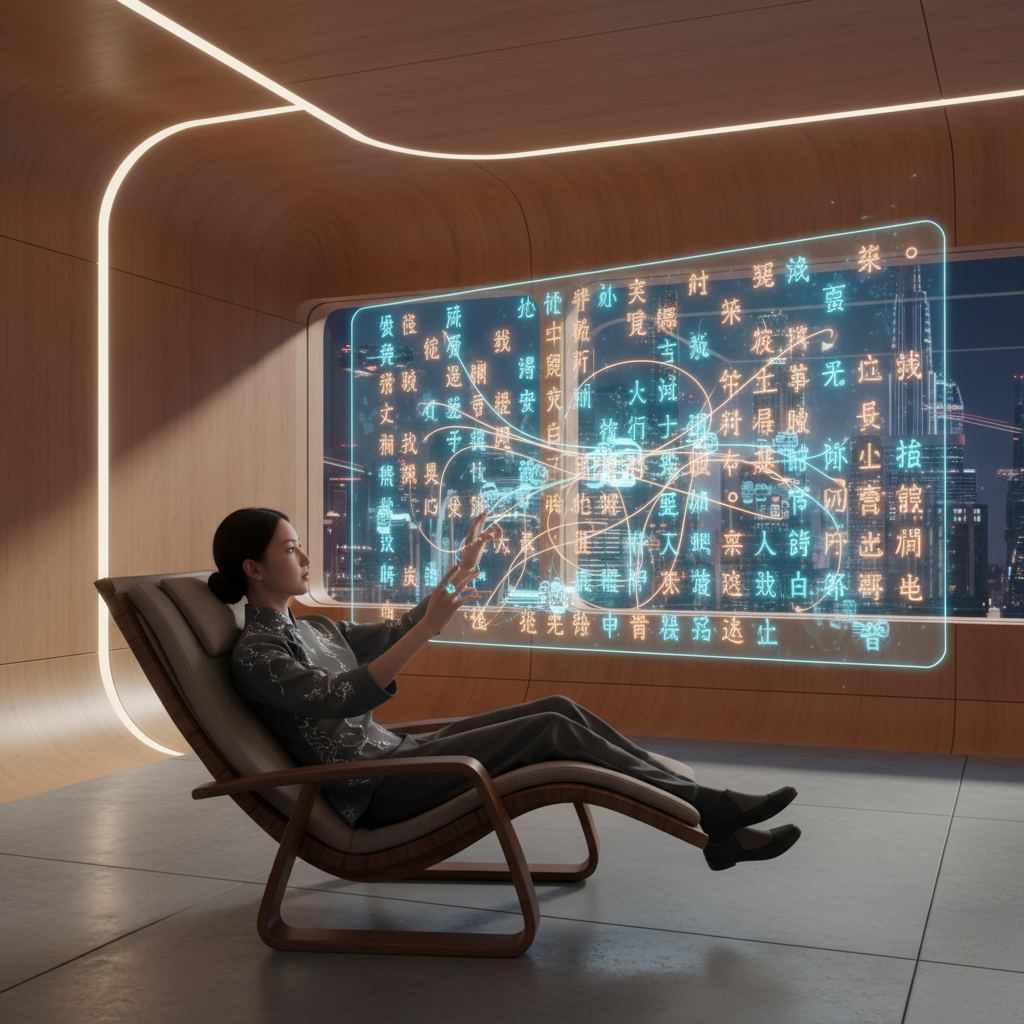
The AI tools available today are impressive, but we are still in the early stages. Here is what I expect to see in the next 12 to 24 months, based on the research papers I am reading and the technology we are developing.
Advances on the horizon:
- Real-time AR character recognition: point your phone camera at Chinese text and get instant pronunciation, meaning, and example sentences overlaid on the real world. Early versions exist but accuracy and speed are improving rapidly.
- Emotionally intelligent tutoring: AI that detects frustration, boredom, or confusion from your interaction patterns and adjusts its teaching approach accordingly. Not just what you are learning, but how you are feeling while learning it.
- Native-quality AI voices with regional accents: current text-to-speech is good but still identifiable as synthetic. The next generation will be indistinguishable from native speakers and available in Beijing standard, Taiwanese Mandarin, Singaporean Mandarin, and more.
- Multi-modal learning integration: AI that combines text, audio, video, and interactive exercises into seamless learning experiences where you read a passage, hear it spoken, watch a video demonstration, and practice the key phrases -- all guided by a single AI that knows exactly where you are in your learning journey.
- AI-powered language exchange matching: systems that pair you with human conversation partners based on complementary skills, schedules, and interests, then provide real-time AI assistance during your conversations when you get stuck.
The Bottom Line
AI has not made learning Chinese easy. Mandarin is still a genuinely challenging language for English speakers, and anyone who tells you otherwise is selling something. What AI has done is make learning Chinese efficient. It has eliminated the wasted hours, the misdirected effort, the one-size-fits-all frustration that caused nine out of ten learners to give up. For a full rundown of the tools that matter most, see our list of essential Chinese learning tools every beginner needs.
If you tried to learn Chinese before and quit, the tools have changed. If you have been thinking about starting but felt intimidated by the time commitment, the timeline has compressed. If you are currently studying with traditional methods and feel like you are not making progress, there is a reason -- and AI is the solution.
"The question is no longer whether AI can help you learn Chinese. It is whether you are willing to spend 45 minutes a day finding out how far it can take you."
The tools are here. The excuses are not. Start today.
Start Learning Chinese with AI Today
Join thousands of learners using AI-powered lessons, conversation practice, and real-time pronunciation feedback. Your 10-week curriculum is waiting.
Learn Chinese for Beginners
Watch practical AI-powered Chinese lessons on the Learn Chinese for Beginners YouTube channel. New videos every week covering tones, vocabulary, grammar, and real conversation practice.
Subscribe on YouTubeRelated Articles

Best Online Mandarin Course for Serious Learners, Not Casual Apps

Essential Chinese Learning Tools Every Beginner Needs (Free and Paid Breakdown)

How to Practice Chinese Tones Online Without a Tutor (5 Proven Methods)
Written by Conor Martin AI
Creator of the Learn Chinese for Beginners YouTube channel and the Chinese AI learning platform. Helping thousands of people start their Mandarin journey with clear, structured, no-nonsense teaching.
Enjoyed this article?