
The Science Behind Why Chinese Tones Are So Hard (And How to Finally Master Them)
Neuroscience explains why your brain resists tonal languages -- and research-backed strategies reveal how to rewire it.
You have been studying Chinese for three months. You can read 200 characters. You know the grammar for basic sentences. You have memorized greetings, numbers, and how to order food. Then you open your mouth in front of a native speaker, say something you have practiced dozens of times, and get a blank stare. They have no idea what you just said.
The problem is almost certainly your tones. And before you beat yourself up about it, you should know something: tones are not hard because you are bad at languages. Tones are hard because of how the human brain processes sound, and specifically because of what happens when you grow up speaking a non-tonal language like English.
This article is about the science behind that difficulty. For a practical overview of the four tones themselves, see our complete guide to Mandarin Chinese tones. Understanding why your brain resists tones is the first step toward training it to accept them. I am going to walk through the neuroscience, debunk some popular myths, and then give you the evidence-based strategies that actually work.
Your Brain Was Not Built for This (Or Was It?)
Every human is born with the ability to distinguish tones. Infants in English-speaking households can perceive Mandarin tonal contrasts just as well as infants in Beijing. This has been demonstrated repeatedly in studies using head-turn preference procedures, where babies turn toward novel sounds. At six months old, every baby on earth is a potential tonal language speaker.
Then something remarkable happens. Between six and twelve months of age, your brain begins pruning. It strengthens the neural pathways for sounds that matter in your native language and weakens the pathways for sounds that do not. English uses pitch for emphasis and emotion -- the difference between "You are going" and "You are GOING?" -- but never to change the meaning of a word. So your brain learns to treat pitch as decoration rather than information.
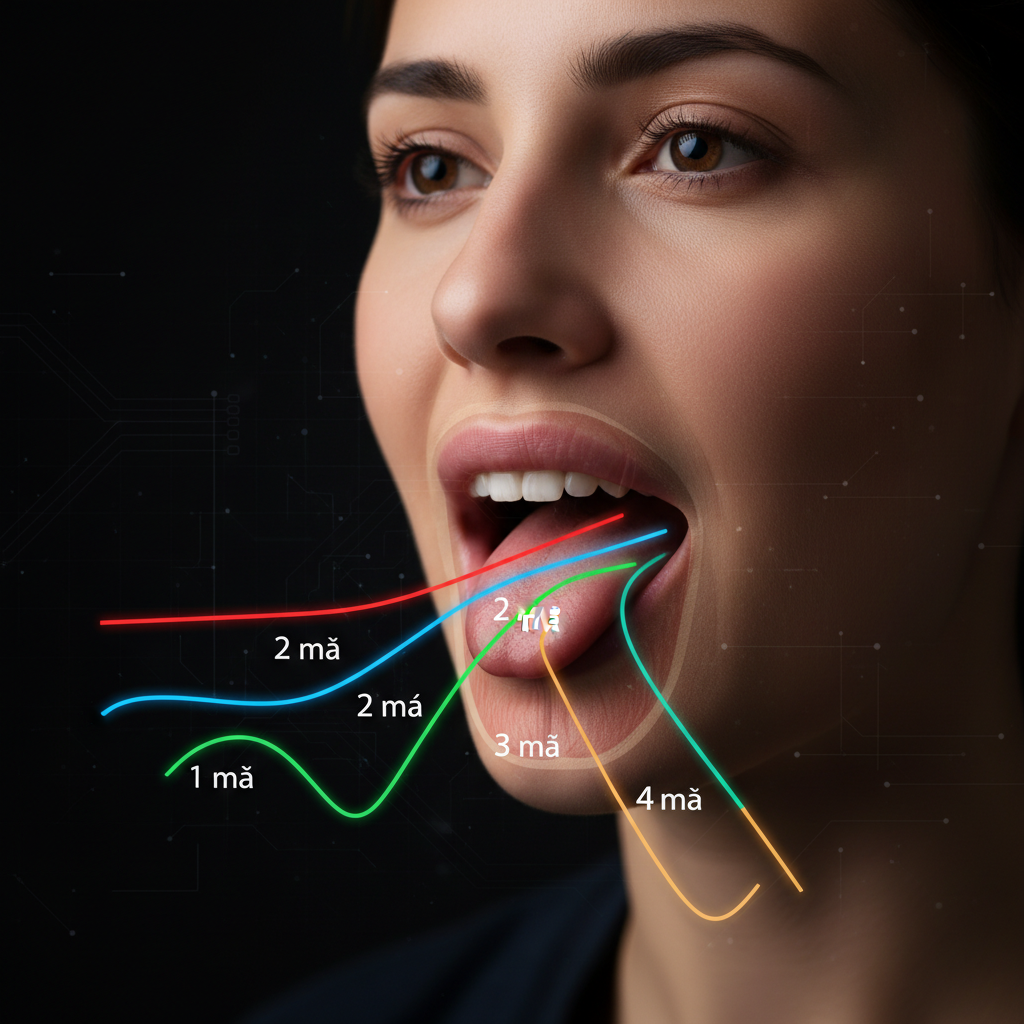
This is called perceptual narrowing, and it is one of the most well-documented phenomena in developmental psychology. By your first birthday, you have already lost the ability to easily distinguish sounds that your native language does not use. Japanese infants lose the ability to distinguish "r" from "l." English infants lose the ability to hear tonal contrasts as meaningful. The neural real estate gets repurposed for distinctions that matter in English, like the difference between "bat" and "pat."
Pro tip: The difficulty of Chinese tones is not a character flaw or a talent gap. It is a predictable consequence of neural development. Your brain literally optimized itself away from tonal perception during infancy. Learning tones as an adult means reversing a process that happened before you could walk.
Our AI platform uses targeted perception drills to retrain your brain for tonal hearing -- exactly what the research recommends.
The Two Separate Problems With Tones
Most Chinese courses treat tones as one problem. They are actually two completely separate cognitive challenges, and conflating them is one reason traditional tone instruction fails so badly.
Problem One: Perception
Can you hear the difference? When a native speaker says "ma" in first tone versus "ma" in fourth tone, can you reliably tell them apart? For many beginners, the honest answer is no -- at least not consistently, and especially not in connected speech where tones interact and modify each other.
Perception is a prerequisite for production. You cannot reliably produce a sound you cannot reliably hear. Yet most courses skip straight to "repeat after me" exercises without first training the ear. This is like asking someone to paint a sunset when they cannot see the color red.
Problem Two: Production
Even after you can hear tones clearly, producing them is a separate motor skill. Your vocal cords need to learn new patterns of tension and relaxation. The muscles controlling your pitch need to execute precise trajectories while simultaneously handling consonants, vowels, and the rhythm of natural speech. This is motor learning, and it follows the same principles as learning to throw a ball or play a musical instrument.

Research from McGill University showed that learners who received dedicated perception training before production training achieved significantly better tone accuracy than those who practiced both simultaneously from the start. The perception-first group spent the first two weeks only listening -- no speaking at all. By week six, they were outperforming the other group on both perception and production measures.
Why the "Just Listen More" Advice Fails
If you have asked for tone advice online, someone has inevitably told you to "just immerse yourself and it will click." This advice is well-intentioned and wrong. Passive exposure to tonal input does not efficiently retrain an adult brain that has already undergone perceptual narrowing.
The key word is "efficiently." Yes, massive amounts of input will eventually shift your perception. But research on perceptual learning consistently shows that active training with feedback is orders of magnitude faster than passive exposure. A study published in the Journal of the Acoustical Society of America found that eight hours of targeted perceptual training produced the same gains as an estimated 200 or more hours of passive exposure.
"Active training with immediate feedback is not slightly better than passive listening. It is 25 times more efficient. Eight hours of targeted practice accomplishes what 200 hours of passive exposure might eventually achieve."
The difference is feedback. When you passively watch a Chinese show, your brain has no reason to update its acoustic categories. You hear tones, process them vaguely, and move on. But when you are forced to make a judgment -- "Was that second tone or third tone?" -- and then immediately learn whether you were right or wrong, your brain updates its models. Each trial with feedback is a tiny recalibration. Stack thousands of these trials, and you get genuine perceptual rewiring.
The Third Tone Conspiracy
If there is one tone that causes more confusion than all the others combined, it is the third tone. And the reason is fascinating: what textbooks teach you about third tone is a simplification that borders on misinformation.
Every Chinese textbook shows the third tone as a deep V shape -- the pitch drops down and then rises back up. This is the citation form, the way third tone sounds when you say a single syllable in isolation with no context. In actual connected speech, third tone almost never sounds like this.
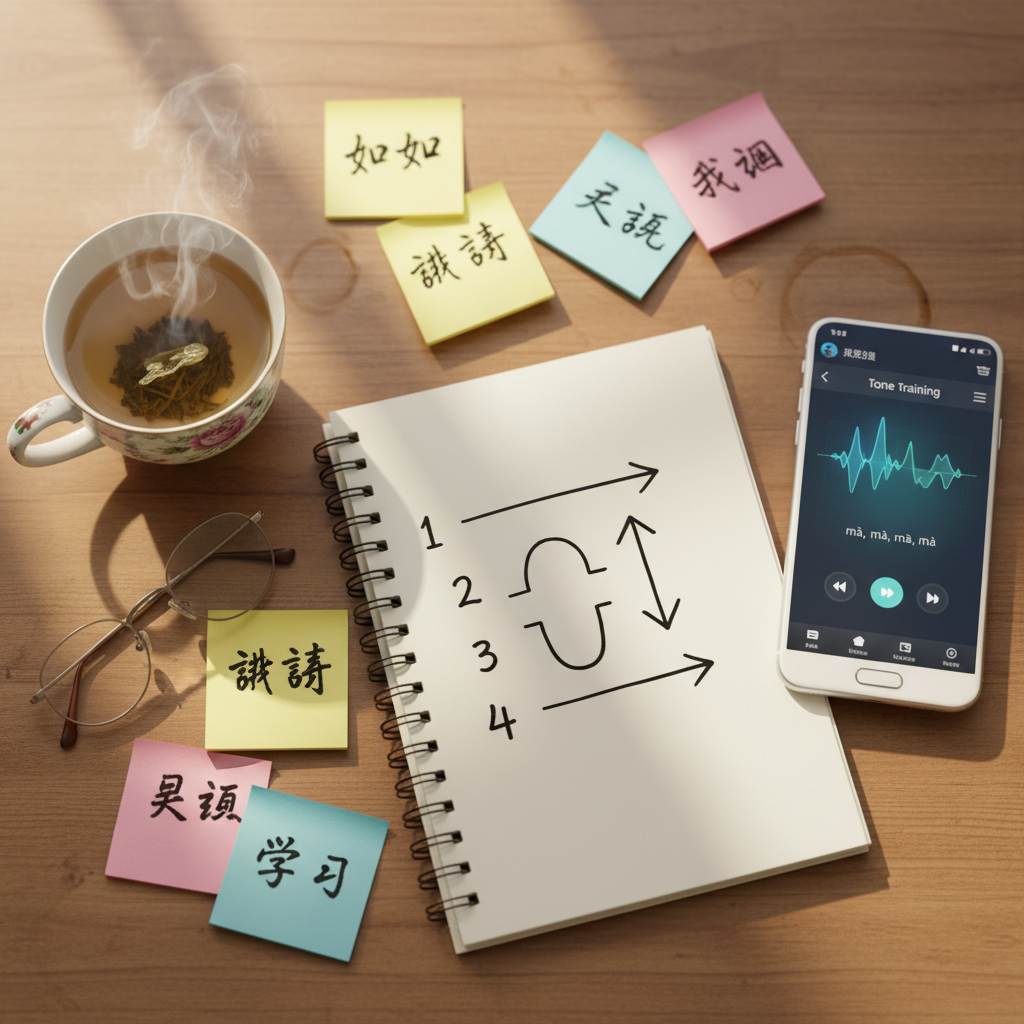
In natural Mandarin, third tone before another third tone becomes second tone (the famous "tone sandhi" rule). Third tone before first, second, or fourth tone is typically just a low falling tone -- it drops and stays low, with no rising tail. The full dip-and-rise only appears in isolation or at the end of a phrase. So the shape you practiced 500 times is the least common version of the tone you will actually encounter.
This matters because learners who internalize the V-shape as "the" third tone end up producing an exaggerated dip-and-rise in every context. Native speakers hear this as unnatural and sometimes confusing. The fix is to practice third tone in context from the beginning -- in two-syllable words and phrases, not in isolation.
The Tone Pair Method: What Actually Works
The most effective method for tone training that I have seen -- both in published research and in results from our own platform -- is the tone pair method. Instead of practicing individual tones, you practice every possible combination of two tones in sequence.
Mandarin has four tones plus the neutral tone, which gives you roughly 20 two-tone combinations. The tone pair method has you drill each combination with real vocabulary until the transitions become automatic. This works because in real speech, you are never producing tones in isolation. You are always navigating from one tone to the next, and it is the transitions that trip people up.
Here is how to implement the tone pair method effectively:
- Start with perception only. Listen to minimal pairs (words that differ only in tone) and identify which tone pair you hear. Do this for at least one week before adding production.
- Use real words, not abstract syllables. "Zhongguo" (China, tone 1-2) is more memorable and useful than drilling "ba-ba" in various tone combinations.
- Focus on the hardest pairs first. For English speakers, the most difficult combinations are typically 2-3 (rising then dipping), 3-2 (which becomes 2-2 via sandhi), and 1-4 (high flat then falling). Spend more time here.
- Record yourself and compare. Use an app or AI tool that overlays your pitch contour against a native model. Visual feedback accelerates motor learning dramatically.
- Practice in increasingly noisy and complex contexts. Start with isolated words, then phrases, then sentences, then conversation. Each level adds cognitive load that tests whether the tones are truly automatic.
Practice Every Tone Pair with AI Feedback
Chinese AI drills all 20 tone pair combinations with real-time pitch analysis, so you know exactly which transitions need work.
What Musicians Know (And Non-Musicians Can Learn)
You may have heard that musicians have an advantage with tones. This is true, and the reason is instructive. Musical training develops the ability to perceive and categorize pitch with much higher resolution than untrained listeners. Musicians literally have thicker cortical regions in the areas responsible for pitch processing.
But here is the important nuance: the advantage is in initial learning speed, not in ultimate attainment. Non-musicians who do targeted tone perception training catch up within weeks. The musical advantage is a head start, not a permanent gap. Your brain can develop the same enhanced pitch processing through targeted practice -- it just takes a bit longer.
Pro tip: If you have no musical background, consider doing basic pitch training exercises alongside your tone study. Apps that train you to identify whether a note is higher or lower, or to match a pitch with your voice, build the same neural infrastructure that tone perception requires. Ten minutes a day of pitch training can accelerate your tone acquisition significantly.
The Emotional Interference Problem
There is one more neuroscience complication that rarely gets discussed. In English, pitch changes primarily convey emotion and attitude. A rising pitch at the end of a sentence signals a question. A sharp falling pitch conveys anger or finality. A flat, high pitch can signal surprise.
When English speakers hear Mandarin, their brains initially route the pitch information through the same emotional processing channels. Fourth tone (sharp falling) can unconsciously register as angry or aggressive. Second tone (rising) can feel like a question. This emotional interference makes it harder to process tones as neutral, linguistic information.
This is why some learners report that speaking in tones feels "dramatic" or "unnatural" -- their brains are associating the pitch patterns with emotional content rather than lexical meaning. Awareness of this interference is half the battle. Once you recognize that the discomfort is your English pitch-emotion mapping interfering with your Chinese pitch-meaning mapping, you can consciously override it.
A 30-Day Tone Rewiring Protocol
Based on the research I have reviewed and the results we see on our platform, here is a concrete 30-day protocol for transforming your tone perception and production. This is not casual advice -- it is a structured program that works.
Week 1: Perception Foundation
Spend 15 to 20 minutes daily on pure listening exercises. Use minimal pair identification drills where you hear a syllable and identify the tone. Start with single syllables, then progress to two-syllable words by day four or five. Do not speak Chinese this week. Let your ears lead.
Week 2: Production Introduction
Continue 10 minutes of perception training daily. Add 10 minutes of production practice using the tone pair method. Record yourself on every attempt and compare against native models. Focus on first and fourth tone pairs first, as these are the most physically distinct and give you quick wins.
Week 3: Contextual Integration
Reduce isolated drills to 5 minutes. Spend 15 minutes practicing tones within full phrases and short sentences. This is where tone sandhi rules become important -- practice third-tone-before-third-tone combinations until the sandhi change is automatic. Use AI conversation practice at a slow pace, focusing on getting tones right rather than on communication speed.
Week 4: Fluency Under Pressure
Practice tones in real-time conversation at increasingly natural speeds. Use AI conversation partners that flag tone errors in real time. The goal is to produce correct tones without conscious effort -- to make them automatic. By the end of this week, your isolated tone accuracy should be above 80 percent, and your conversational tone accuracy above 60 percent.

The Bottom Line
Tones are hard for a scientifically understandable reason: your brain optimized away from tonal perception before you could walk. But the same neuroplasticity that allowed that optimization also allows you to reverse it. The brain remains remarkably adaptable throughout life -- it just needs the right kind of training.
The right kind of training is active, feedback-rich, perception-first, and pair-based -- see our guide on how to practice Chinese tones online without a tutor for concrete exercises. It is not passive immersion, not rote repetition of tone diagrams, and not hoping that tones will "click" with enough exposure. It is deliberate, structured practice that targets the specific neural pathways responsible for pitch categorization.
"You are not bad at tones. You are untrained at tones. There is a profound difference, and it is one that 30 days of the right practice can prove to you."
Start with your ears. Trust the process. And remember that every native Chinese speaker under the age of one was in exactly the same position you are in now -- hearing tones without understanding them. They figured it out. So will you.
Ready to Rewire Your Brain for Chinese Tones?
Our 10-week AI-powered curriculum includes structured tone training built on the exact research discussed in this article. Start with perception drills, progress to tone pairs, and graduate to real conversation.
Learn Chinese for Beginners
Watch step-by-step tone training videos on the Learn Chinese for Beginners YouTube channel. New lessons every week with native speaker demonstrations and AI-assisted practice exercises.
Subscribe on YouTubeRelated Articles

Written by Conor Martin AI
Creator of the Learn Chinese for Beginners YouTube channel and the Chinese AI learning platform. Helping thousands of people start their Mandarin journey with clear, structured, no-nonsense teaching.
Enjoyed this article?