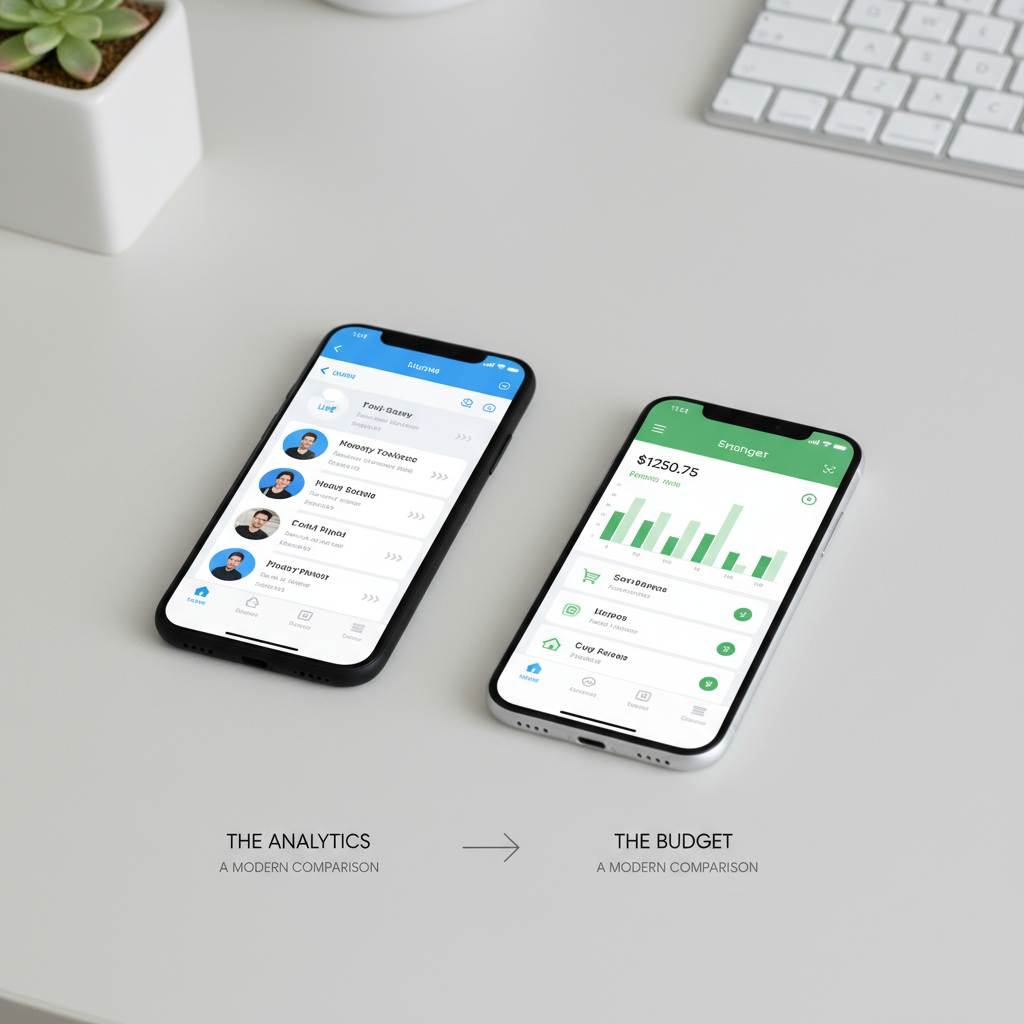
Hello Chinese vs Duolingo for Learning Mandarin Online: An Honest Comparison
Both apps claim to teach you Chinese. One was built for Chinese from the ground up. The other bolted Chinese onto a system designed for Spanish. The difference matters more than you think.
This comparison exists because I see the question asked weekly in every Chinese learning forum on the internet: "Should I use Duolingo or Hello Chinese?" The answers are usually tribal -- Duolingo fans defend Duolingo, Hello Chinese fans defend Hello Chinese, and neither side addresses the real question, which is whether either app alone can actually teach you Chinese. Spoiler: neither can. But they fail in different ways and to different degrees, and understanding those differences matters if you are going to use one of them as part of your learning toolkit.
I have used both apps extensively. Not as a reviewer skimming through a few lessons, but as a language educator systematically testing every feature against what cognitive science tells us about how adults acquire Mandarin. What follows is not a quick feature comparison. It is a detailed analysis of how each app handles the specific challenges of Chinese -- tones, characters, grammar, listening, and speaking -- and where each one will leave you stranded.
The Fundamental Design Difference
Duolingo was designed as a universal language learning platform. Its core mechanics -- translation exercises, word matching, sentence building from word banks -- were developed primarily for European languages with shared alphabets, similar grammar structures, and cognate vocabulary. Chinese was added later, and the app's architecture constrains how well it can handle a language that shares essentially nothing with English.
Hello Chinese was designed specifically for teaching Mandarin to English speakers. Its exercises, progression, and feature set were built from the ground up to address the unique challenges of Chinese: tonal pronunciation, character acquisition, radically different grammar, and the interplay between spoken and written Chinese. This design-first-for-Chinese approach gives it structural advantages that are difficult for a general platform to replicate.
This fundamental difference manifests in every aspect of the learning experience, from how tones are taught to how characters are introduced to how grammar is explained. Let me walk through each one.
Tones: The Most Critical Difference
Tones are the single most important skill for a Mandarin beginner, and the area where the difference between these two apps is most stark.
Duolingo's approach to tones is, to be blunt, inadequate. The app provides minimal tone instruction -- a brief introduction early on and then largely ignores tones for the rest of the course. Its speech recognition checks whether you said the right word but does not reliably evaluate whether you used the correct tone. You can produce "ma" with a completely wrong tone, get marked correct because the speech-to-text engine recognized the syllable, and move on believing your pronunciation is fine. After weeks of this, you have practiced incorrect tones hundreds of times, and those incorrect patterns are now deeply embedded in your muscle memory.
Hello Chinese takes tones seriously. It introduces all four tones in dedicated lessons early in the course, provides visual tone diagrams alongside audio, includes specific tone pair exercises, and its speech recognition is calibrated to evaluate tonal accuracy, not just syllable recognition. When you get a tone wrong, the app tells you which tone you produced and which one you should have produced. This feedback loop is essential for self-correcting tone production, and it is largely absent from Duolingo.
Pro tip: If you use Duolingo for Chinese and do nothing else, you will almost certainly develop tone habits that a native speaker finds confusing or incomprehensible. If you use Hello Chinese, your tones will not be perfect, but they will be significantly more accurate because the app actually evaluates and corrects them. This single difference is enough to recommend Hello Chinese over Duolingo for anyone serious about pronunciation.
Character Learning
Duolingo introduces characters through its standard exercise types: matching characters to translations, selecting the correct character from options, and typing translations. There is no systematic teaching of how characters work -- no radical instruction, no stroke order, no explanation of why characters look the way they do. Characters are presented as arbitrary symbols to be memorized, which is the least efficient way to learn them.
Hello Chinese includes dedicated character writing exercises with stroke order animation, radical explanations for many characters, and a progression that generally introduces simpler characters and common radicals before more complex ones. You can practice writing characters on screen and the app evaluates your stroke order and accuracy. This is meaningful because stroke order is not arbitrary -- it reflects the internal structure of the character, and learning it correctly helps you distinguish similar-looking characters and remember them more reliably.
Neither app teaches characters as well as a dedicated character learning tool with systematic radical instruction and spaced repetition. But Hello Chinese gets significantly closer to that ideal than Duolingo, which essentially treats characters as an afterthought.
Grammar Instruction
Chinese grammar is structurally very different from English. Word order follows different rules. Aspect markers replace tenses. Measure words are required between numbers and nouns. Topic-comment structure dominates where English uses subject-verb-object. These differences need explicit explanation because they are not intuitively learnable through translation exercises alone.
Duolingo relies on implicit learning through pattern exposure. You see grammar in context and are expected to infer the rules. For some grammar points, this works adequately. For distinctly Chinese structures like the "ba" construction, resultative complements, or the various uses of "de," implicit exposure is insufficient. These structures are counterintuitive for English speakers and need explicit explanation to be understood and correctly produced.
Hello Chinese provides brief grammar explanations before introducing new structures. These explanations are not comprehensive -- they are limited by the app format -- but they exist, and they address the most common points of confusion for English speakers. The app also uses dialogue-based lessons that contextualize grammar in realistic conversation, which is more effective than Duolingo's isolated sentence exercises for understanding how grammar functions in actual communication.

Listening and Speaking
Both apps include listening exercises where you hear Chinese and respond. Duolingo's audio uses text-to-speech that is clear but somewhat robotic, and at a speed that does not represent natural conversation. Hello Chinese uses recorded native speaker audio that sounds more natural and includes some variation in speed and style, though still slower than real-world Chinese speech.
For speaking, both apps include exercises where you speak into your phone. As discussed above, Duolingo's speech evaluation is unreliable for tone accuracy. Hello Chinese's is better, though still imperfect -- it catches obvious tone errors but can miss subtle ones. Neither app provides the quality of pronunciation feedback that AI-powered pronunciation coaching tools offer, but Hello Chinese is meaningfully closer.
Neither app offers free-form conversation practice. All speaking exercises are structured responses to prompts. This means neither app develops the crucial skill of producing original Chinese in real time -- they only develop the ability to reproduce learned phrases. For conversation skills, you need something else entirely.
The Gamification Question
Duolingo is the undisputed champion of gamification. Its streak system, leaderboards, hearts, gems, and league competitions create powerful engagement loops that keep you coming back. And showing up matters -- consistency is the single strongest predictor of language learning success, so anything that gets you to study daily has genuine value.
The problem is that Duolingo's gamification optimizes for app engagement, not for language acquisition. The exercises that are most engaging (matching games, easy multiple choice) are often the least effective for learning. The exercises that would be most effective (free recall, production, tone drilling) are less engaging and therefore underrepresented. You end up feeling productive -- your streak is growing, your XP is accumulating -- while your actual Chinese ability lags behind your sense of progress.
Hello Chinese has lighter gamification -- progress tracking, some achievement badges, daily goals -- but it does not pursue engagement as aggressively as Duolingo. The result is that Hello Chinese feels less addictive but more educational per minute of use. Whether you prefer the Duolingo approach (higher engagement, lower efficiency per session) or the Hello Chinese approach (lower engagement, higher efficiency per session) depends on your personality and discipline.
Content Depth and Coverage
Duolingo's Chinese course covers vocabulary roughly equivalent to HSK 1 through HSK 3, with some HSK 4 content in its later units. The total word count is respectable, and if you complete the entire tree, you will have been exposed to a reasonable foundation of Chinese vocabulary.
Hello Chinese's free tier covers less content than Duolingo, but its premium subscription provides structured courses from beginner through intermediate with more comprehensive coverage of each topic. Where Duolingo teaches vocabulary through isolated sentences, Hello Chinese organizes content into topic-based lessons with dialogues, cultural notes, and grammar explanations that provide richer context for each word.
The depth difference matters more than the breadth difference. Learning 50 words with full context, correct tones, and usage understanding is more valuable than learning 100 words as translations without tone confidence or usage knowledge. Hello Chinese generally provides more depth per topic; Duolingo provides more breadth across topics.
The Verdict: Neither App Is Enough
Here is the conclusion that neither app's marketing team wants you to hear: no single app will teach you Chinese. Not Duolingo, not Hello Chinese, not any other app on the market. Chinese is too complex, too multidimensional, and too different from English to be adequately taught through a phone app alone, no matter how well designed.
That said, if you are going to use one app as part of a broader study routine, Hello Chinese is the better choice for Chinese specifically. Its tone instruction, character teaching, and grammar explanations are all meaningfully superior for the unique challenges of Mandarin. For another popular alternative, see our review of whether Yoyo Chinese is worth it. Duolingo is a better general language learning app and a better engagement machine, but those advantages do not compensate for its deficiencies in handling what makes Chinese difficult.
Choose Hello Chinese if:
- You are serious about developing accurate pronunciation and tones
- You want character writing practice with stroke order guidance
- You prefer explicit grammar explanations over pure implicit learning
- You are willing to pay for a premium subscription for full content access
- Your goal is Chinese specifically, not sampling multiple languages
Choose Duolingo if:
- You need maximum gamification to maintain daily consistency
- You want a completely free option with no paywall on core content
- You are exploring Chinese casually alongside other languages
- You will supplement it heavily with other resources for tones and characters
- Engagement and habit formation are bigger challenges for you than learning efficiency
What Both Apps Are Missing
Regardless of which app you choose, you will need to supplement it with tools that address what apps structurally cannot provide. Real-time AI conversation practice for speaking fluency. Dedicated spaced repetition for vocabulary retention beyond what either app's built-in review provides. Extended listening practice with native-speed audio. Reading practice with real Chinese text. If you want to skip apps entirely, read our guide on how to learn Chinese online for free without Duolingo. These are the components that transform app-level familiarity into actual language ability.
"The best app for learning Chinese is not an app. It is a system: a structured curriculum for new material, spaced repetition for retention, AI conversation for speaking, and real content for immersion. The app is one piece. Do not mistake it for the whole."
Go Beyond What Apps Can Offer
Our platform combines structured lessons, AI pronunciation coaching, conversation practice, and spaced repetition into a unified system designed specifically for Mandarin. It fills the gaps that Duolingo and Hello Chinese leave open -- tones, speaking, and real comprehension.
Related Articles



Written by Conor Martin AI
Creator of the Learn Chinese for Beginners YouTube channel and the Chinese AI learning platform. Helping thousands of people start their Mandarin journey with clear, structured, no-nonsense teaching.
Enjoyed this article?